Which way round to ride a loop
Clockwise or anticlockwise. On a windy day it can be worth a few minutes, and on a calm one it does not matter at all.
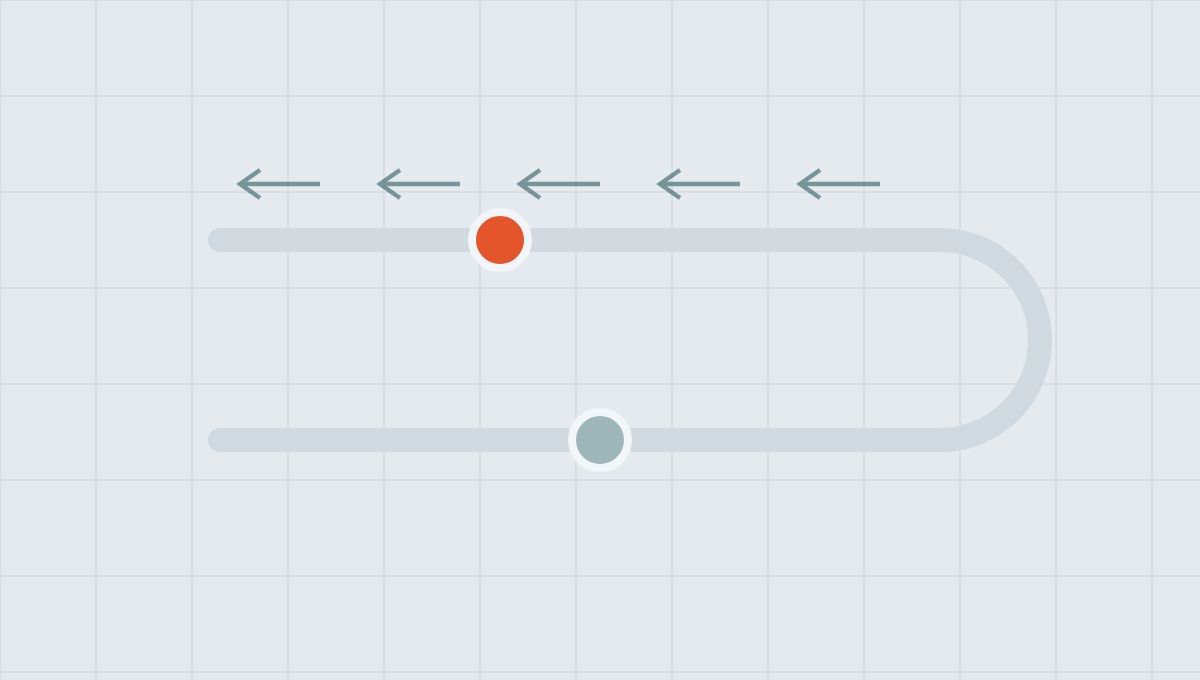
Ride the way round that puts the least headwind on the descents. On a loop you meet roughly the same wind either way, but drag grows with the square of your speed, so a headwind costs far more at 40 km/h going downhill than at 10 km/h going up.
Turn the wind
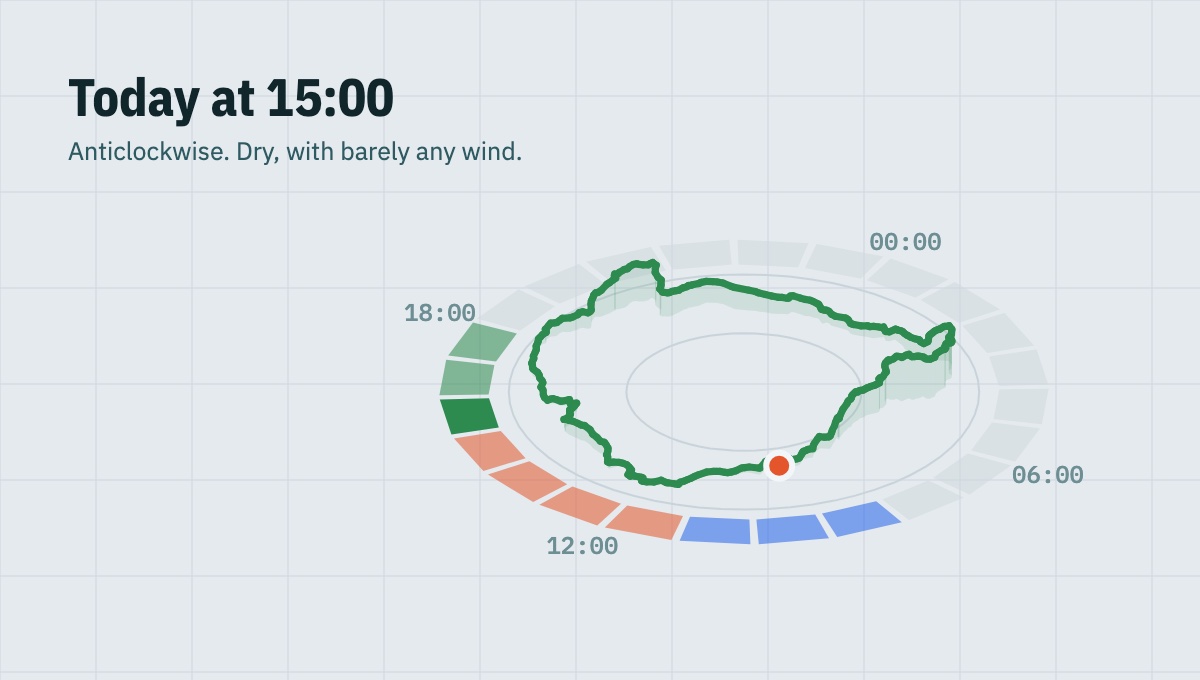
The 43 km loop from Røa in Oslo, 1,017 m of climbing, measured by the rule the app uses on a simplified copy of the route. In a south wind the app itself says 8.6 km clockwise and 6.9 km anticlockwise: the same answer, from finer detail.
Why the total wind barely changes
A loop finishes where it started, so whichever way you ride it you spend about as long riding into the wind as with it. Reversing the loop swaps which stretches those are. It cannot make the wind go away.
What it does change is where you meet it. Ridden one way, the long open descent might be straight into the wind. Ridden the other way, the same wind meets you on the climb, where you are slow anyway and it costs much less.
Why the descents matter most
Air resistance rises with the square of the speed of the air past you. On a climb at 10 km/h into a 20 km/h wind, the air is coming at you at 30 km/h. On a descent at 40 km/h into the same wind, it is 60 km/h, and the drag is four times as much. The wind takes most of its toll where you are fastest.
How Linje measures it
Each stretch of the route is compared with the forecast wind along it at the hour you leave, from MET Norway. Wind within about 70° of straight ahead counts as a headwind, because even at 70° off the nose about a third of it is still holding you back.
Stretches falling by more than 1.2% count as descents. The metres of headwind on them are added up once for each direction, and the one with fewer is the one Linje suggests, with the difference: 1.7 km less headwind on the descents anticlockwise.
Below a kilometre of difference, Linje does not interrupt you about it. Most of the time the wind does not care which way round you go.
Out and backs and A to B rides
An out and back has no way round: you ride into the wind one way and with it the other. What changes is the time you leave, which is the question the best time to leave answers. On an A to B ride the wind is what it is, and the forecast hour is the only choice.
Questions
Which way should I ride a loop in the wind?
The way round that puts the least headwind on the descents. On a loop you meet roughly the same wind either way, but a headwind costs far more at 40 km/h going downhill than at 10 km/h going up.
Does it matter which way round you ride a loop?
Only when it is windy. Linje suggests a direction when one way puts at least a kilometre less headwind on the descents. Below that, either way is about the same.
Should I start a loop into the wind?
Not as a rule. On a loop the total wind is about the same either way round. What changes is where you meet it, so Linje picks the direction that keeps the headwind off the fast descents.
Sources
- Wind forecasts: MET Norway's Locationforecast: api.met.no
- Drag as the square of air speed is the standard aerodynamic drag equation.
Describes the app as of .
Related
Where are you riding next?
Linje builds the ride, then works out when to leave and which way round. Join the waitlist for early access.