Average cycling speed and ride times
How fast you will go and how long a ride will take, from the distance, the climbing and how hard you ride.
A steady rider putting out about 150 watts averages around 26 km/h on flat ground in still air, and around 21 km/h on a ride with 10 m of climbing in every kilometre. So 50 km takes just under two hours on the flat and about 2 hours 20 minutes with hills, not counting stops.
Work out your ride
Average speed by effort
| Terrain | 100 W | 150 W | 200 W | 250 W |
|---|---|---|---|---|
| Flat | 22.3 km/h | 26.5 km/h | 29.7 km/h | 32.4 km/h |
| 10 m of climbing per km | 16.5 km/h | 21.4 km/h | 25.2 km/h | 28.4 km/h |
| 20 m of climbing per km | 13.1 km/h | 17.9 km/h | 21.9 km/h | 25.2 km/h |
Hills cost more than they give back. You climb slowly and descend fast, so the time lost going up is far more than the time made up coming down, and a hilly ride is always slower on average than a flat one at the same effort.
How long a ride takes
| Distance | 100 W | 150 W | 200 W | 250 W |
|---|---|---|---|---|
| 20 km | 54 min | 45 min | 40 min | 37 min |
| 50 km | 2 h 14 min | 1 h 53 min | 1 h 41 min | 1 h 33 min |
| 80 km | 3 h 35 min | 3 h 01 min | 2 h 42 min | 2 h 28 min |
| 100 km | 4 h 29 min | 3 h 47 min | 3 h 22 min | 3 h 05 min |
| Ride | 100 W | 150 W | 200 W | 250 W |
|---|---|---|---|---|
| 20 km, 200 m up | 1 h 13 min | 56 min | 48 min | 42 min |
| 50 km, 500 m up | 3 h 02 min | 2 h 20 min | 1 h 59 min | 1 h 46 min |
| 80 km, 800 m up | 4 h 50 min | 3 h 44 min | 3 h 10 min | 2 h 49 min |
| 100 km, 1000 m up | 6 h 03 min | 4 h 41 min | 3 h 58 min | 3 h 31 min |
These are moving times. A café, a puncture or a run of traffic lights comes on top, and on a long day the stops can add more than any of the differences in this table.
Why Linje needs the time
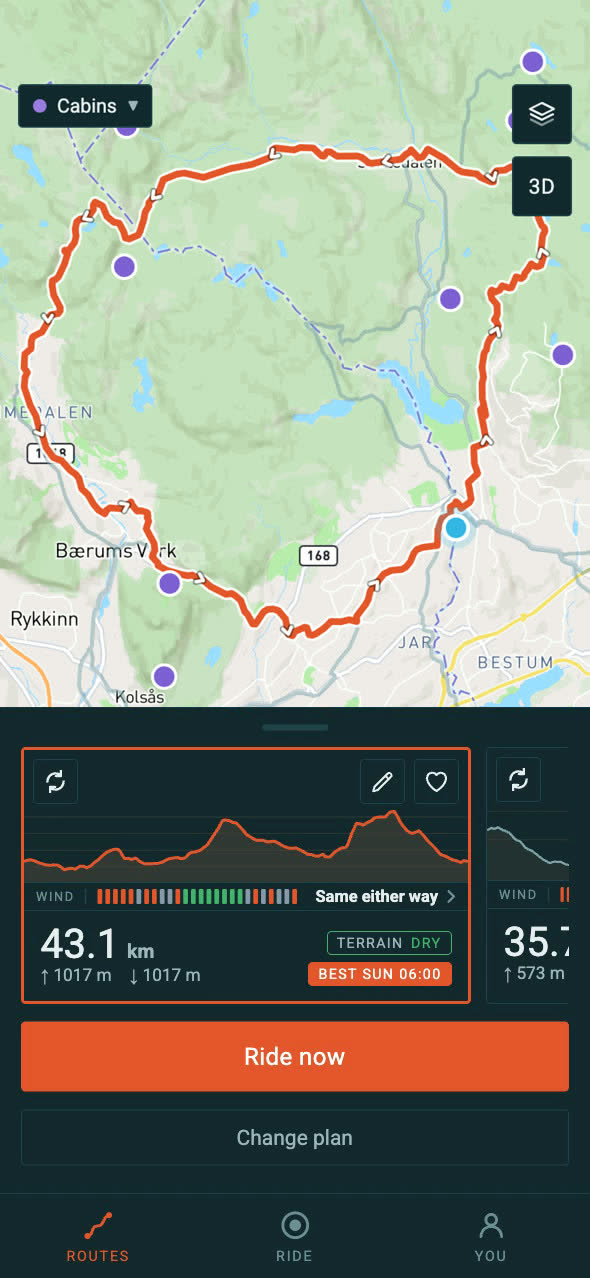
The same model works out how long each ride in Linje will take. That is not just for the card: it decides which hour of the forecast you are in at each part of the ride, so the wind and rain on the way home are read for when you will actually be there.
Until you have recorded a few rides, Linje assumes 150 watts. After that, it uses your own average.
Why your own average will differ
- Wind. A 20 km/h headwind takes about 10 km/h off a 26 km/h rider. What the wind costs
- Tyres and surface. These figures assume gravel-capable tyres on mixed surfaces. Slick road tyres on smooth tarmac are faster, and soft gravel is slower.
- Position. They assume hands on the hoods. Lower is faster, and sitting up is slower.
- Riding in a group. Sitting behind another rider saves a lot of effort, and none of that is in here.
- How the climbing comes. The calculator spreads it over climbs at an average of 5%, with descents at the same gradient and no faster than 50 km/h.
How it is worked out
The calculator finds the speed at which your effort exactly meets the three forces against you: rolling resistance, the climb and the air.
- Rolling resistance 0.006, a gravel-capable tyre on mixed surface
- Drag from your frontal area, worked out from your height and weight, with a drag coefficient of 1.0 on the hoods
- Air at sea level and 15 °C, a 12 kg bike and 97% of your effort reaching the back wheel
Questions
What is a good average speed on a bike?
It depends on effort, hills and wind. In Linje's model a rider putting out a steady 150 watts averages about 26.5 km/h on flat ground in still air, 22 km/h at 100 watts and 32 km/h at 250 watts. With 10 m of climbing in every kilometre, the same 150 watts averages about 21 km/h.
How long does it take to cycle 50 km?
About 1 hour 53 minutes of riding on the flat at a steady 150 watts, or about 2 hours 20 minutes with 500 m of climbing. Stops come on top.
How long does it take to cycle 100 km?
About 3 hours 47 minutes on the flat at 150 watts, or 4 hours 41 minutes with 1,000 m of climbing. At 250 watts it is about 3 hours 5 minutes on the flat.
How much do hills slow you down?
At 150 watts, 10 m of climbing per kilometre takes an average speed from 26.5 km/h to 21.4 km/h, and 20 m per kilometre takes it to 17.9 km/h. The time lost climbing is never made back on the descents.
Figures worked out on with the model in the Linje app.
Related
Where are you riding next?
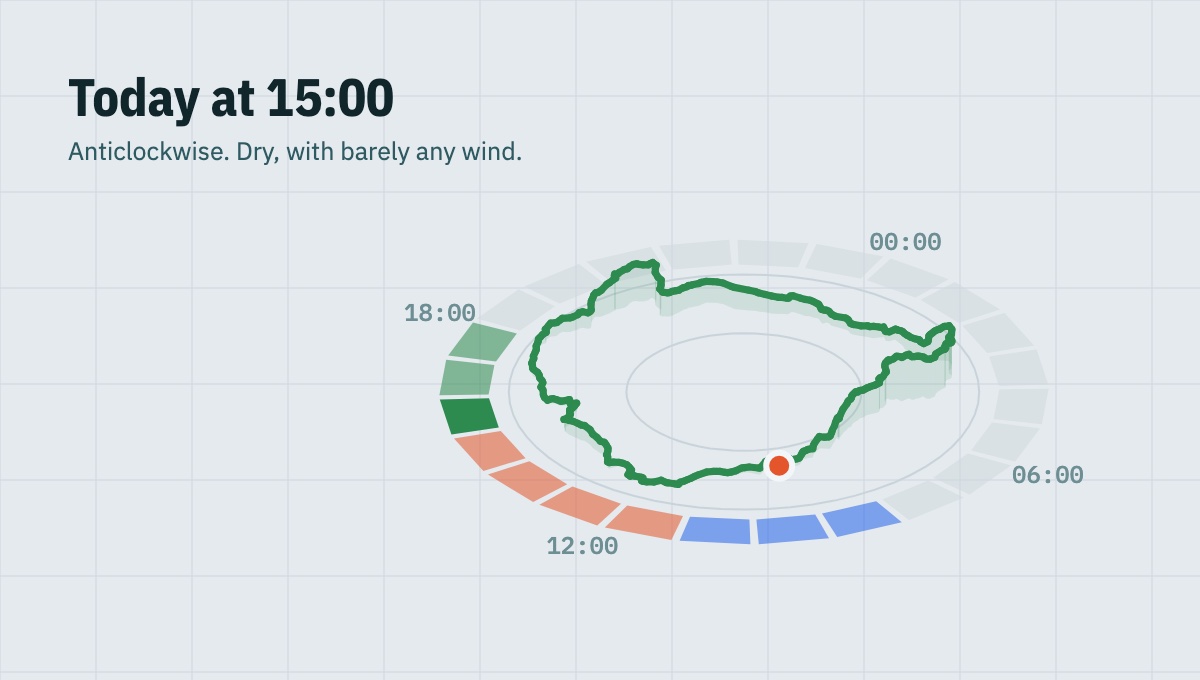
Linje builds the ride, then works out when to leave and which way round. Join the waitlist for early access.