The best time to leave
Two days of forecast, every hour a possible start, and a short list at the end with the reason for each.
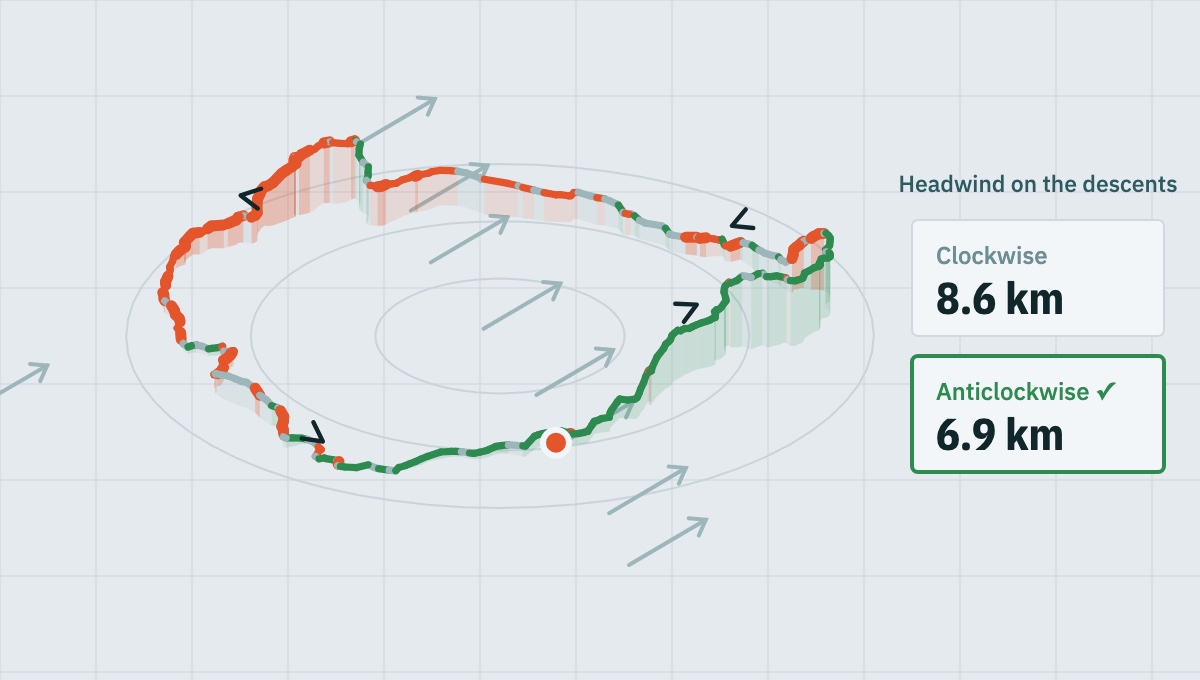
Linje tries every hour of the next two days as a start time for your ride. An hour where you would get rained on is ruled out. The rest are ranked by what the wind would cost you, in metres of climbing, and the best are shown with which way round to ride.
Pick an hour
Tap an hour to make it rain then, and watch the suggestion move.
An example weekend: the 43 km loop from Røa at a steady 150 watts, with the wind worked out by the app's own model, hour by hour. The rain is yours to add.
Rain decides, the wind ranks
Rain and wind are different kinds of fact, so Linje never adds them together. More than about half a millimetre falling on you between setting off and getting home makes a wet ride whatever the wind is doing, so that hour is not a candidate. The wind is a matter of degree, so it orders the hours that are left.
Folding both into one score would invent a rate of exchange between being wet and being tired that no rider has, and it would hide the reason, which is the part you actually want.
The wind, in metres of climbing
For each hour, Linje rides the route in its model at a steady effort, both ways round, with the wind forecast for each part of the ride at the hour you would reach it. The extra time the wind costs becomes the climb that would cost the same: a headwind that adds ten minutes at 150 watts is about the same work as an extra 100 m of hill.
Two hours within 30 m of each other count as the same. A forecast two days out cannot tell them apart. Below about 3.5 m/s, the wind is not a reason to pick an hour at all.
The effort is 150 watts, roughly a steady touring rider, until you have recorded a few rides. Then it is your own average.
Daylight, then lights, then night
- A ride that fits between sunrise and sunset is offered.
- A ride that starts after sunrise and gets home by midnight is offered too, marked as needing lights. A calm, dry evening is a good ride with a light on the bike.
- Nothing that starts between midnight and sunrise is suggested.
Sunrise and sunset are worked out for where you start, on the day, so a June evening in Norway that never gets dark is offered and a December afternoon that already is gets marked.
Weather along a longer ride
The forecast is read at the start and, on rides that go more than about 15 km away, at points every 25 km along the way and at the finish too. A long ride can leave one weather for another, and the wind at the far end is not the wind at home.
Questions
What is the best time to go for a bike ride?
The hour when you stay dry and the wind costs your ride least. Linje works it out for your route from MET Norway's hour-by-hour forecast for the next two days: hours with rain are ruled out and the rest are ranked by the wind.
How does Linje measure what the wind costs?
As metres of climbing: the extra time the wind adds to your ride at a steady effort, turned into the climb that would cost the same. Two hours within 30 m of each other count as the same.
Does Linje suggest rides after dark?
Yes, if they start after sunrise and finish by midnight, marked as needing lights. Nothing that starts between midnight and sunrise is suggested.
Sources
- Hour-by-hour wind and rain: MET Norway's Locationforecast: api.met.no
- The ride model: the same physics as the ride time calculator.
Describes the app as of .
Related
Where are you riding next?
Linje builds the ride, then works out when to leave and which way round. Join the waitlist for early access.