How long gravel takes to dry after rain
The question every gravel rider asks the morning after a wet day, and the numbers Linje uses to answer it.
It depends on how much fell. Linje looks back three days: under 4 mm and gravel counts as dry, then damp, soft from 12 mm and heavy from 30 mm. Rain older than three days is treated as gone.
These are thresholds for describing a ride, not a measurement of a particular track. Sun, wind, warmth and what the track is made of all change how fast it drains.
A week of rain
Drag any day's bar to change its rain. For a gravel ride, on a mild night.
The thresholds
| Rain | Gravel | What to expect |
|---|---|---|
| Under 4 mm | Dry | Rides as it does in summer |
| 4 to 12 mm | Damp | Firm, with wet patches and spray from the wheels |
| 12 to 30 mm | Soft | Slower and heavier going, with puddles in the low spots |
| 30 mm or more | Heavy | Mud on the softer tracks, and a ride that takes noticeably longer |
Rain in the last day, 1 mm or more, makes the surface wet whatever came before. All of this is about the unpaved part of a ride: on a route that is mostly tarmac, rain does not change how it rides, and Linje says so rather than warning about it.
What makes it dry faster or slower
Sun and wind. An open track in a breeze dries in a fraction of the time of the same track under trees. A forest road can stay soft long after the fields around it are dry.
Warmth. A millimetre of rain in June is gone far sooner than the same millimetre in November.
What the track is made of. Compacted crushed stone drains quickly. Tracks with clay or earth in them hold water, and the ruts keep it.
Frost. Frozen gravel rides hard and fast, then softens as it thaws. Linje says when: hard until about 11:00.
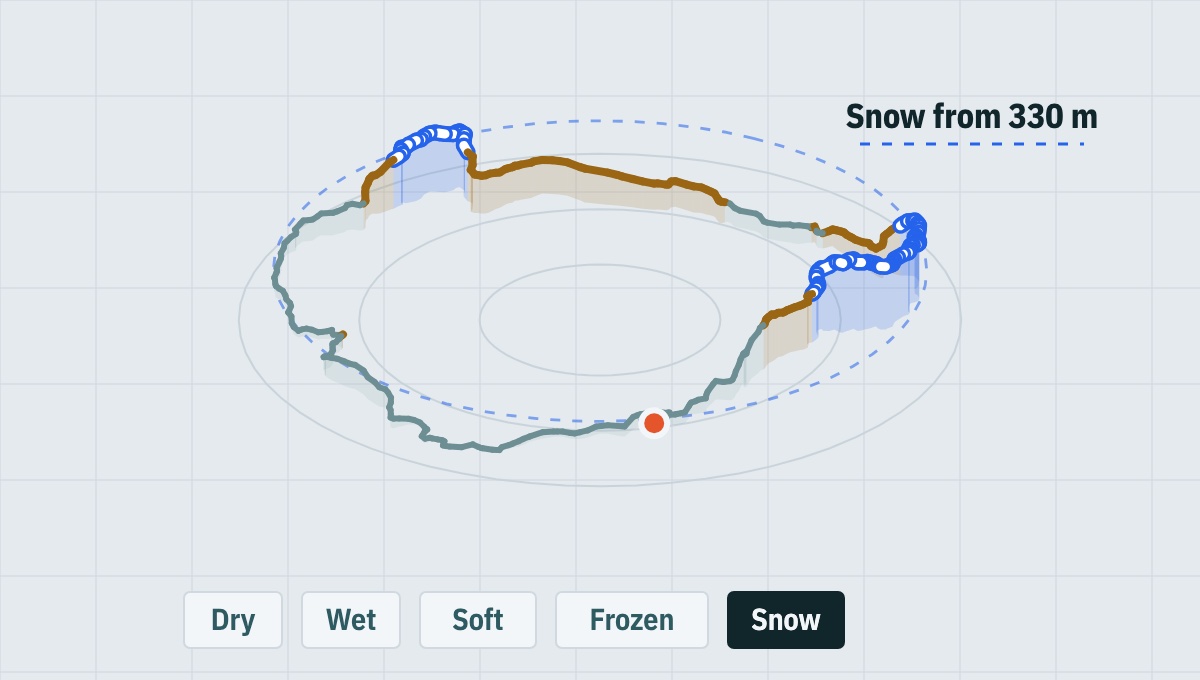
Snow. Melting snow keeps a track wet for days after the last rain. In Norway, Linje checks the snow along the route as well.
Riding it soft
Soft gravel is slower and takes more out of you, so plan for a longer ride. Wider tyres at lower pressure float better, and on a soft forest path a deep rut is a sign the track would rather you came back another day.
Where the rain figures come from
Linje reads the rain from NVE's seNorge model. How the terrain check works
Questions
How long does gravel take to dry after rain?
Linje counts the last three days of rain: under 4 mm and gravel is dry, from 4 mm damp, from 12 mm soft and from 30 mm heavy. Rain older than three days is treated as gone, though sun, wind, warmth and the track itself change how fast it drains.
How much rain makes gravel soft?
In Linje's terrain check, 12 mm or more over three days makes gravel soft, and 30 mm or more makes it heavy, on a ride that is at least a quarter unpaved.
Can you ride gravel after rain?
Usually, yes. Damp gravel rides well and only gets slow once it is soft. Expect heavier going after 12 mm in three days, and leave soft forest paths with deep ruts for another day.
Does Linje check the gravel before a ride?
Yes. It reads the rain of the last three days where your ride starts, from NVE's seNorge model, and gives the terrain one word: dry, wet, soft, frozen or snow.
The thresholds Linje uses as of .
Related

Where are you riding next?
Linje builds the ride, then works out when to leave and which way round. Join the waitlist for early access.